
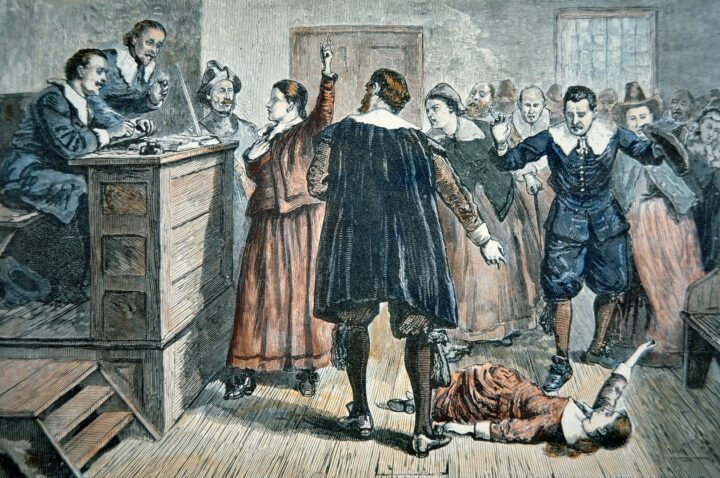
SOMETHING STRANGE IS HAPPENING IN SALEM VILLAGE
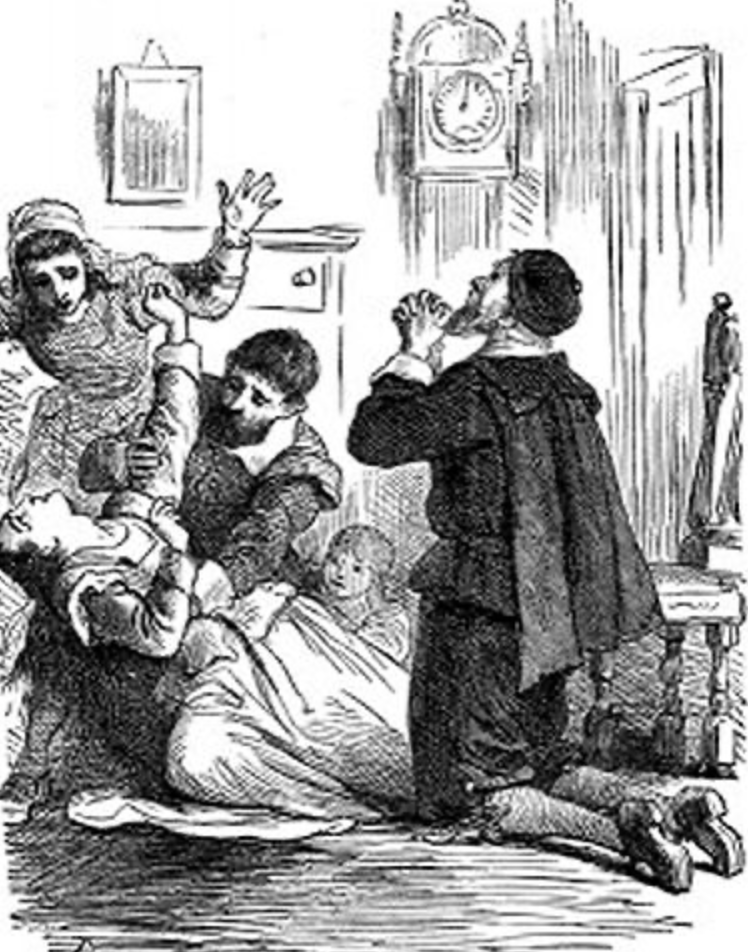
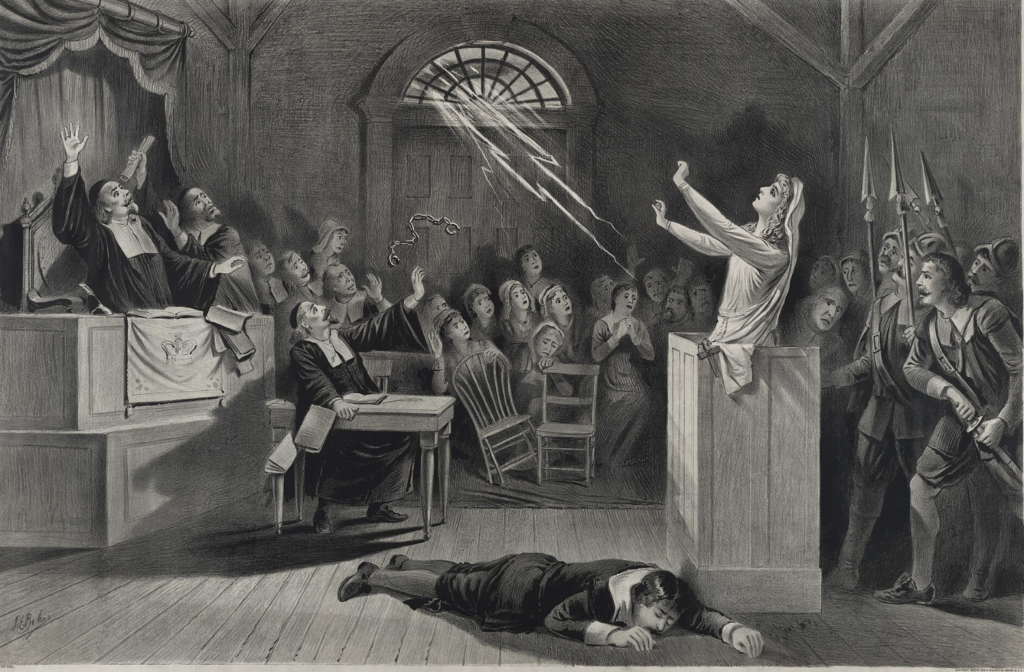
It’s January 1691. In the small colonial town of Salem Village, something strange is happening inside the home of the local minister, Samuel Parris.His daughter, nine-year-old Betty Parris, and his niece, eleven-year-old Abigail Williams, start acting in ways nobody can explain. People say the girls are being bitten and pinched by something invisible. Their arms and backs twist in weird directions, twisting so hard it doesn’t look like something a person could do on their own. Sometimes they go silent. Their mouths clamp shut. Their throats seem to close up. Their whole bodies shake and jerk.
The town doctor takes a look at them. He can’t find anything wrong. With no other answer, he offers a diagnosis anyway: witchcraft.
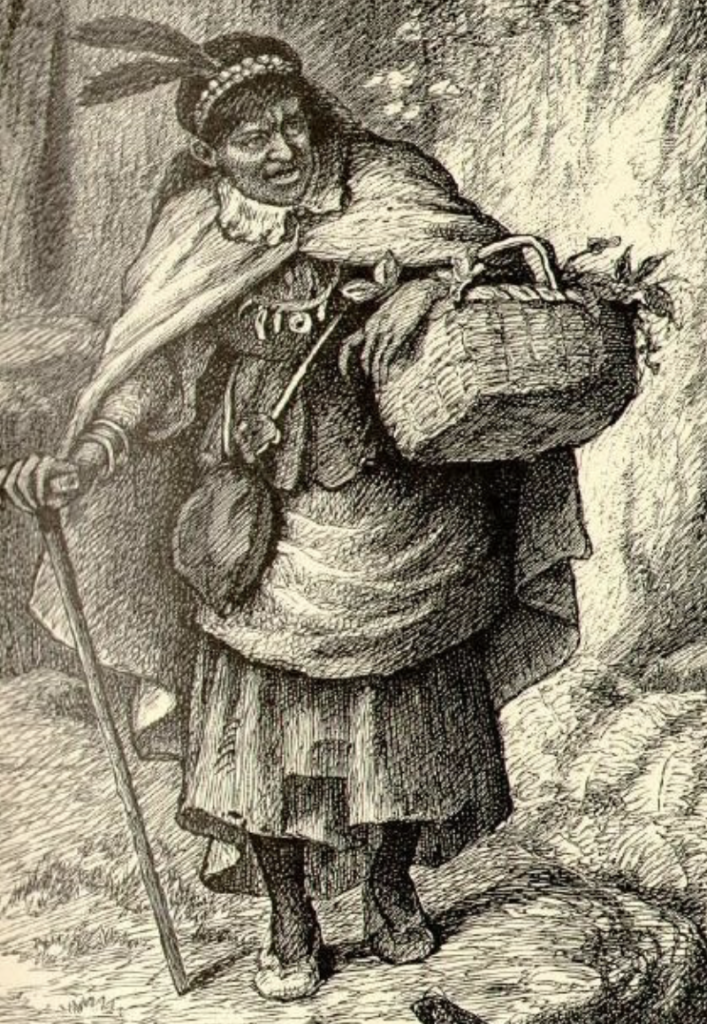
That one word changes everything. Fear spreads fast. A few weeks later, in February, the girls start seeing things that aren’t there. Soon after, they accuse someone — Tituba, a woman who lived and worked in the Parris house. She had baked a bizarre “witch cake,” hoping it would help find whoever was hurting the girls. As soon as people heard about that cake, the girls cried out that Tituba was the one tormenting them. From there, everything snowballs. More people claim to be suffering. More names get named. By the time the Salem witch trials are over, the panic has swallowed the whole village and cost people their lives.
For a long time, this was just seen as a story about fear and pressure in a religious community. But in 1976, one researcher suggested something completely different: that the girls weren’t faking it, and they weren’t just scared. They were in fact poisoned.
THE ERGOT IDEA
In 1976, a researcher named Linnda Caporael wrote a paper with a bold idea. She said a fungus called ergot had gotten into the rye grain the villagers ate. And the chemicals in that fungus, may have caused real physical symptoms that looked a lot like what the girls were going through.
Other researchers pushed back almost right away. Later that same year, two psychologists, Nicholas Spanos and Jack Gottlieb, wrote a paper arguing the evidence didn’t add up. For years after that, not many people talked about it. Then in 1989, a historian named Mary Matossian brought the idea back in her book, digging through old weather records and farming records to make the case again.
So who’s right? To figure that out, we first need to understand what ergot actually is, and what it does to the body.
WHAT IS ERGOT?
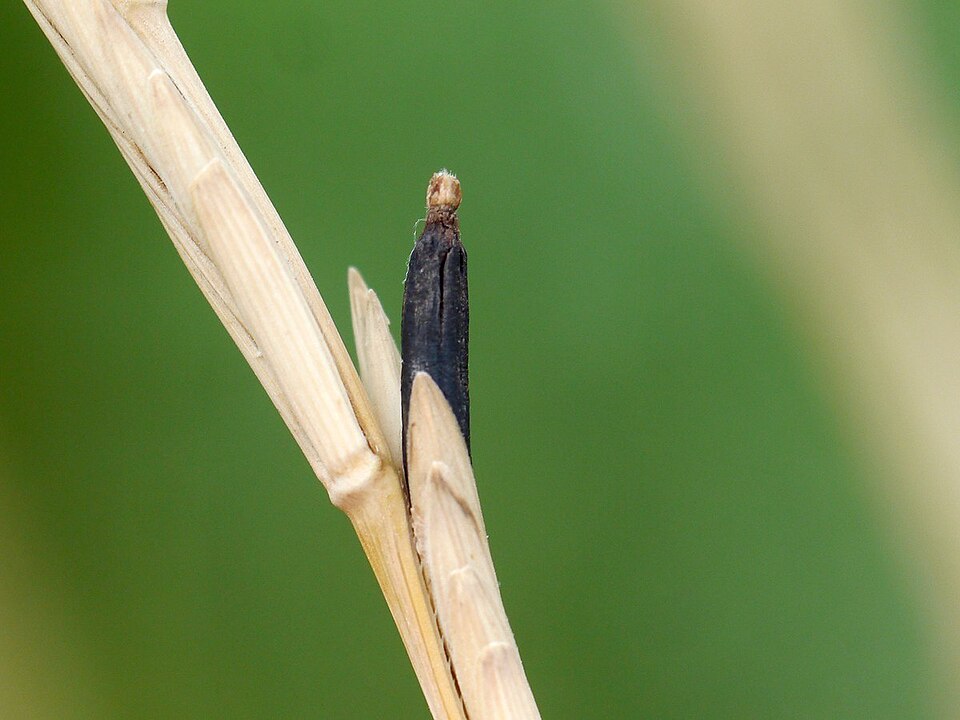
Ergot is a fungus. A living thing, with the scientific name: Claviceps purpurea. It grows on grasses and grain crops all over the world, and it especially likes rye grain.
Here’s how it works. The fungus lands on the flowering part of the grain and takes it over. After a while, the infected grain’s head starts dripping a sticky substance that looks like honey. Eventually, the fungus hardens into a dark, solid lump that sits right there among the healthy graiN, almost like a piece of rot mixed in with good food. That dark lump is the dangerous part. It’s full of natural toxins that are poisonous to people and animals. Even today, governments carefully limit how much of this stuff is allowed in food. It doesn’t take much to cause harm.
But back in the 1600s in Salem, nobody knew any of this. Nobody had even discovered ergot yet, let alone learned to test grain for it. If it was in the food, people just ate it.
TWO KINDS OF POISONING
Ergot poisoning can show up in two very different ways.
The first kind attacks blood flow to the hands and feet. It can cause the tissue there to die off, leading to something like frostbite that never heals.The second kind is the one that matters for our story. It causes vomiting, diarrhea, and exhaustion. It can make the skin feel like ants are crawling all over it. It causes vivid hallucinations, twitching, painful muscle spasms, and seizures a lot like epilepsy.
Now think back to Betty Parris and Abigail Williams. Twisted limbs. Choking. Seeing things that weren’t there. It’s hard not to notice how closely that matches. Doctors actually saw this exact kind of poisoning firsthand during a real outbreak in France in 1951. They noticed something interesting: not every patient got every symptom, some got it worse than others, and the hallucinations often didn’t show up until ten or twelve days after the first signs of illness.
They also noticed that the two kinds of poisoning: the one that kills off body tissue, and the one that causes fits and hallucinations. They almost never happen in the same outbreak. It’s one or the other.
DID ERGOT POISONING HAPPEN IN SALEM?
So the question is: could ergot poisoning have happened in Salem?
For this theory to work, the fungus needs a way to actually get to Salem. And it turns out the weather at the time fits surprisingly well for fungal growth. Ergot grows best after a cold winter followed by a wet summer. A colonist named Samuel Sewall kept a daily diary, and in late 1690 he wrote about extreme cold, over and over. Then, the next summer, he wrote about big thunderstorms and terrible heat.
Old tree-ring records back this up too. They show that growing seasons across New England were cooler than usual through this whole stretch of years. A cool spring gives the fungus time to spread. A hot, wet summer lets it grow. And a lot of the local farmland sat near swamps, exactly the kind of damp ground where this fungus tends to do best.
Here’s the tricky part: nobody in the 1600s used the word “ergot.” It wasn’t identified in North America until over a hundred years later. But people did write, again and again, about a grain disease called “blasting” or grain that turned black in the field. Blasting and ergot look a lot alike, and it’s very possible people were describing ergot without having a name for it yet.
One old record from the 1630s warns that in New England’s low, swampy fields, “rye doesn’t like it here,” and describes cattle getting sick from the grass in those spots. Another writer described floods in early summer that made the grass “foul” for the animals to eat. In fact, a colonial historian described something very specific: in early July, a sticky “honey dew” would fall on the wheat, and the next morning, if it was hot and still, the grain would show signs of rot. That description: sticky dew, followed by blackened grain, matches the life cycle of ergot almost exactly.
If we put it all together, and we get a picture: some kind of grain sickness was around, behaving exactly the way ergot behaves, in the very years right before the witch trials began.
BACK TO THE BETTY AND ABIGAIL
One of the oldest medical accounts of this kind of poisoning notes that people would fall ill “every year in December and January.” Betty and Abigail started showing symptoms in January. They could have gotten sick from eating infected rye bread. Or maybe just from breathing in flour dust in the kitchen, where they spent hours, often alongside Tituba.
Here’s the piece that makes this really interesting: one of ergot’s toxins is chemically close to LSD. People under its influence tend to become highly impressionable and prone to vivid mental imagery of people, animals, even religious visions. If the girls had this in their systems, they’d have been primed to believe almost anything, especially coming from a doctor who suggested witchcraft, or a minister preaching hellfire sermons about the devil.
When we put it all together: real physical illness, minds wide open to suggestions, and a trusted adult pointing straight at the supernatural. Suddenly, the accusations spreading like wildfire did not seem so strange.
WHAT DO THE SKEPTICS SAY?
Fairness demands we hear the other side. Researchers Spanos and Gottlieb raised four main objections to the ergot theory.
First, they cited an old claim that this poisoning only strikes people with a vitamin A deficiency. But that claim was speculation from the start, and decades later, no one has ever proven the link.
Second, they noted that nobody in Salem lost fingers or toes to gangrene, so ergot couldn’t be the cause. But gangrene and the hallucinatory symptoms rarely appear together in the same outbreak anyway. This isn’t the strike against the theory it seems to be.
Third, they argued the girls were too old, since this poisoning hits children hardest, especially those under fifteen. But Betty was nine, and Abigail was about eleven. Both were well within the vulnerable age range.
Fourth, they claimed that if the food was poisoned, everyone in the household should have gotten sick, not just two girls. But that’s not how ergot poisoning works. The same tainted food can affect people very differently, and doctors studying real outbreaks have documented exactly this kind of unevenness.
Taken together, none of these four objections holds up. Each one rests on an assumption the evidence doesn’t actually support.
SO, WHAT REALLY HAPPENED?
None of the old accounts prove ergot caused the Salem witch trials. Records from the 1690s are thin, and most of what survives is secondhand: weather diaries, farming complaints, old accounts of sickness. Nobody wrote the word “ergot” because nobody knew it yet.
But when you put the pieces together: 1- weather that was perfect for this fungus to grow 2-Old records of grain disease that match its behaviour almost exactly 3-Symptoms in two young girls that line up closely with real cases of this poisoning, and 4-a chemical connection to a substance known to cause hallucinations and make people easy to influence.
All of this paints a pretty compelling picture.
Maybe the witches and devils wrent loose in Salem after all.. Maybe it was something growing quietly in the grain.
REFERENCES:
Featherly, J. (2010). The Black Devil Called Ergot.
Linnda, R. (1976). Ergotism: The Satan Loosed in Salem?. Science, 192, 2.
Spanos, N. P., & Gottlieb, J. (1976). Ergotism and the Salem Village Witch Trials: Records of the events of 1692 do not support the hypothesis that ergot poisoning was involved. Science, 194(4272), 1390-1394.
Leave a Reply