
ANCIENT ORIGINS
Rosemary’s story begins in ancient Greece, where students preparing for exams would braid sprigs of rosemary into their hair to make crowns that they thought would sharpen their minds. They associated the herb with Athena, goddess of wisdom, and also burnt it during temple rites.
Egypt perhaps made the most chilling use of all. Archaeologists have discovered tombs more than 3,000 years old with rosemary branches that still smell faintly. The Egyptians put the herb in the hands of their dead, believing that it would help guide the dead into the afterlife.
ANCIENT MEDICINE
Dioscorides prescribed rosemary for jaundice and as an energiser to athletes. Pliny the Elder recommended the root for treating wounds and the seed for chest pain, gout and menstrual problems. In Persian medicine it was prescribed as an imported luxury under the Arabic name osṭoḵūdūs and the great physician Ibn Sina (Avicenna ), called it “beneficial for the brain’’.
SACRED HERB IN CHRISTIANITY
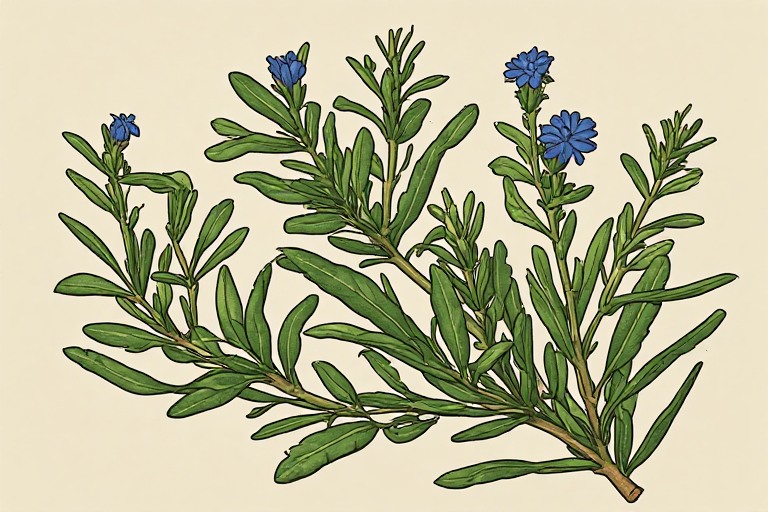
The story of rosemary is deeply entwined in Christian faith. Legend has it that when Mother Mary and the Holy Family fled into Egypt, she covered a blooming rosemary bush with her blue cloak to dry the clothes of the infant Jesus. By morning the blossoms were a brilliant blue and the plant was thereafter known as the “Rose of Mary.” It became a symbol of divine protection and a staple in monastery gardens. Folklore hinted that the plant would never grow taller than Christ, reaching a maximum height of thirty-three years before only spreading outward. This belief turned rosemary into a symbol of luck and health. Families would sprinkle the herb on their floors to let off its scent underfoot, beckoning good fortune for the year ahead, and parishioners would decorate their churches with sprigs of rosemary as well as the usual holly and ivy.
PROTECTION AGAINST PLAGUE & SUPERNATURAL
Rosemary was worth its weight in gold during the black death epidemic that swept Europe. People burnt the herb indoors and carried sprigs in their pockets to walk through infected streets, believing the smoke could cleanse the air. Mediaeval practitioners could not explain the mechanism, but had observed a reality: the herb has some kind of antimicrobial properties.
This reputation for protection soon spread beyond physical health to the world of the occult. Rosemary was said to guard against evil spirits, witchcraft and bad dreams. Its role as a powerful talisman even showed up in historical records including a 1717 trial in Leicester involving herbal charms and ritual brews.
REMEMBRANCE & MOURNING
In Elizabethan England, Rosemary was closely associated with funerals. Mourners carried sprigs, dropping them into graves and keeping small branches to remember the dead. Different places had different ways of burying the dead. In northern England it was considered impolite to attend a funeral without rosemary. In Lincolnshire it was put on the breast of the dead. It was put in their hands in France. Rosemary was put in funeral biscuits in Cheshire and thrown on to the coffin as it was lowered into the grave. In the 20th century, rosemary was still worn with poppies to remember soldiers who had died.
TRADITION OF LOVE, HOPE & NEW LIFE
In Europe, brides would often wear rosemary in their hair, in bouquets, or even bake it into wedding cakes. Wedding guests also dipped rosemary sprigs in wine and pinned them to clothing for luck.
Rosemary was also used in love rituals, and for divination. Young women would plant sprigs of rosemary, named after potential suitors, to see which one grew the best. Others put rosemary and thyme in their shoes on St. Agnes’ Eve or slept with a sprig of rosemary and a crooked sixpence under their pillows on Halloween to dream of a future husband.
Rosemary was also associated with protection and family traditions throughout Europe. Later in Poland, rosemary wedding wreaths were boiled and added to a baby’s first bathwater, connecting marriage to new life. In Portugal they burnt rosemary to drive away the “bad air” of arguments and unhappiness in marriage.
SCIENCE BEHIND THE STORIES
Research has found that rosemary may have benefits for the brain and body. It has been shown to fight harmful microbes, protect brain cells, and have positive effects on mood, learning, and memory. When it comes to memory specifically, studies have showed that a tiny amount may have positive effects on how quickly older adults could recall information. Simply inhaling rosemary oil was also found to affect mood and mental performance in healthy people. Natural chemicals such as rosmarinic acid and carnosic acid present in this herb help fight inflammation and protect cells from damage.
However, experts say that the safety and effectiveness of many herbal medicines, including rosemary, are still not fully understood, and more research is needed before any firm conclusions can be drawn.
REFERENCES
Ghasemzadeh Rahbardar, M., & Hosseinzadeh, H. (2020). Therapeutic effects of rosemary (Rosmarinus officinalis L.) and its active constituents on nervous system disorders. Iranian journal of basic medical sciences, 23(9), 1100–1112. https://doi.org/10.22038/ijbms.2020.45269.10541
Foster, N. (2024, December 20). Rosemary: The herb of ritual and remembrance. JSTOR Daily. https://daily.jstor.org/rosemary-the-herb-of-ritual-and-remembrance
Wigington, P. (2024). Rosemary Magic & Folklore. Learn Religions.
Vârban, D. I., et al. (2019). The influence of some products on the rooting of Rosmarinus officinalis L. cuttings. Hop and Medicinal Plants.


Leave a Reply