
THE ANCIENT TRAVELLER
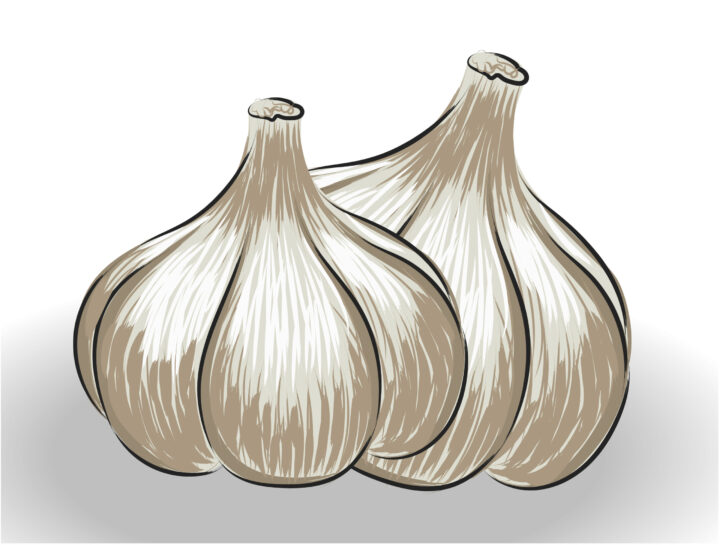
Garlic is one of the earliest vegetables ever domesticated, with its use tracing back more than five thousand years. It is believed to have originated in Central Asian mountain regions, such as the Tien Shan and the Pamirs. From there, it traveled along trade routes, across empires, and eventually across oceans.
Some of the oldest finds come from the Levant. A garlic bulb and cloves from the Chalcolithic period were unearthed near the Dead Sea, and archaeologists found evidence of its cultivation nearby at Ein Gedi. In Uzbekistan, its traces turned up in pottery about four thousand years old.
In Egypt, clay models of garlic bulbs were found in a tomb at El Mahasna, dating to around 3700 BCE, and garlic cloves were found in the tomb of Tutankhamun.
Further east, the Sumerians recorded garlic on clay tablets. In ancient Persia, garlic held great economic value. Records from the reign of King Cyrus in the sixth century BCE mention a royal purchase of 395,000 bunches.
In India and China, garlic appears in medical writings from around 2000 BCE, and the Chinese called it “the divine herb.”
As Roman armies moved north, garlic followed. Charred cloves have turned up in graves, cellars and military camps in what is now Switzerland and Germany.
When Roman rule ended, garlic faded from northern Europe, and it took centuries to return in strength. Around the year 800, Charlemagne included garlic on a list of plants to be grown in royal gardens. By the 1300s, it was growing in the Infirmarer’s Garden of Westminster Abbey in London.
A MEDICINE FOR ALMOST EVERYTHING
Ancient Egyptians believed it cleared gas, aided digestion, provided energy, and expelled “bad spirits.”
Hippocrates, often called the Father of Medicine, prescribed garlic for breathing problems, poor digestion, and fatigue. Pliny listed garlic’s natural enemies, including snakes, scorpions, poisons, and dog bites. Greek and Roman medicine treated garlic as a near cure-all. Garlic was also linked to strength and courage. Greek soldiers ate it before battle. Roosters were fed garlic before cockfights.
In medieval England, healers used garlic for earaches, toothaches, stomach problems, boils, and swellings. These cures often involved prayers, charms, or the sign of the cross. During the age of plague, garlic gained new fame. The physician Paracelsus recommended it against the plague. And there is the story of Four Thieves Vinegar. According to one account, four thieves were caught in Marseille during the plague of 1721, robbing the sick and the dead. They told police that garlic mixed with wine and vinegar had prevented them from contracting the disease.
In World War One, raw garlic juice was applied to wounds to guard against infection. Across Italy, Catalonia, Sardinia, the Netherlands, and the Nordic countries, farmers gave garlic to cattle, horses, sheep, and chickens, especially to expel worms
GARLIC AND RELIGION
The Talmud, the primary source of Jewish religious law, gives garlic five qualities. It satisfies hunger, warms the body, brightens the face, increases fertility and fights intestinal parasites.
In Islamic tradition, the Prophet Muhammad advised that anyone who had eaten garlic or onion should stay away from the mosque due to its strong smell. Even so, garlic was widely used in Islamic medicine.
In Christian communities, garlic is not prominent in religious texts. But it played a large role in folk practice and in the medicine made by monks in medieval monasteries.
In Buddhism, garlic is one of the “Five Pungent Spices,” along with onions, chives, leeks and shallots. Many practitioners are advised to avoid them. One Buddhist text suggests that these foods can disturb meditation.
MAGIC, WITCHES AND THE EVIL EYE
The Romans believed garlic drove away evil spirits, and excavations at Pompeii show garlic painted on house walls. Yet they also left dishes of it at crossroads shrines for Hecate, the goddess of witches.
Serbians said witches hated the smell and never ate garlic. Since witches were thought most dangerous at Christmas and Easter, people rubbed themselves and their children with garlic on those days, and placed it in or under the cradles of newborns.
Greek and Turkish sailors hung it on their ships to prevent shipwreck, and in Romanian belief, a mother holding two cloves during childbirth could protect her child from a life of crime.
Northern Europe had its own garlic magic. In England before the Norman Conquest, garlic was used against elves, night goblins and the “mare,” a spirit thought to ride on sleepers at night.
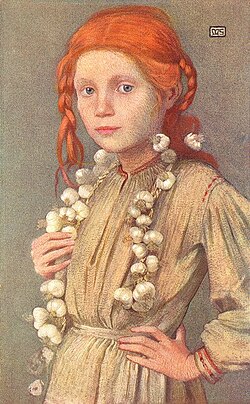
Then there is the evil eye, the belief that careless praise can attract harm. Around the Mediterranean, garlic was one of the strongest defences against it. Among Sephardic Jews, a risky compliment might be answered with “Let it go to the garlic,” and babies wore necklaces of garlic cloves, often with blue beads. In Greece, simply saying “garlic” aloud could protect a child praised too much, and garlic was hung in trees if someone admired an orchard too openly.
THE VAMPIRE QUESTION
Today, garlic and vampires go together almost automatically, but the history is more complicated.
Vampire stories have their roots in the Balkans, and the word “vampire” only appeared after the Middle Ages. Romanian folklore collected in the late 1800s describes many ways garlic was used against these creatures. It could be placed in the mouth of a dead person who might rise again. On certain nights, such as St. Andrew’s Eve, windows were rubbed with garlic in the shape of a cross, and garlic was put on doors and even rubbed on cows in the shed. Since vampires were thought to enter through chimneys and keyholes, those openings got garlic too. Among the South Slavs, it was even said that a man who does not eat garlic is a vampire.
In Britain, the link came much later. Old English healing books used garlic against elves, witches and demons, but never against blood-drinking creatures from the grave. The idea of garlic as a vampire repellent seems to have caught on in Britain only after Bram Stoker’s Dracula was published in 1897.
FOOD OF THE PEASANTS
For much of history, garlic carried a social label: food for the poor.
In ancient Greece, ordinary people enjoyed garlic soup while the upper class disliked it. Yet a Roman fresco from around 100 to 150 CE shows a garlic bulb on a platter with spices, a sign that it was a normal part of Roman cooking.
In late medieval France, garlic was thought fit only for the rough stomachs of peasants, and a Renaissance source warned that serving it at a banquet would make guests look like country folk. Still, the rich did not avoid it completely. Renaissance banquet recipes used garlic to flavor sturgeon and paired it with truffles.
In Britain, aversion to garlic was a well-established norm in cooking before 1800, and a theatre postcard from 1921 shows an Englishman shocked to find garlic in his food. In the United States, this spice was once seen as foreign and linked to immigrants, especially Italians, until celebrity chefs embraced it.
WHAT DOES SCIENCE SAY?
When fresh garlic is crushed or cut, an enzyme quickly converts alliin into allicin. These sulfur compounds are believed to be responsible for much of garlic’s flavor and health benefits. Studies have linked this plant to improved heart health, antioxidant protection, and enhanced detoxification. Many studies, including research conducted in China, suggest a correlation between higher garlic consumption and a lower risk of stomach cancer. However, clinical trials in humans have often yielded unconvincing evidence or demonstrated only minor effects. Nevertheless, excessive intake can irritate the stomach or trigger allergic reactions, and garlic supplements may interact with certain medications.
Some traditional beliefs also appear to have merit. Garlic seems effective against specific worms in horses, aligning with its historical use by farmers. Researchers continue to advocate for further studies on its impact on exercise, gut health, infections, and aging.
REFERENCES:
Dugan, F. M. (2016). Seldom just food: Garlic in magic and medicine in European and Mediterranean traditions. Digest: A Journal of Foodways and Culture, 5(1).
Yaniv Bachrach, Z. (2025). Garlic as a medicine throughout the ages (Review). World Academy of Sciences Journal, 7, Article 49. https://doi.org/10.3892/wasj.2025.337
Tsai, C. W., Chen, H. W., Sheen, L. Y., & Lii, C. K. (2012). Garlic: Health benefits and actions. BioMedicine, 2(1), 17-29.
Leave a Reply