
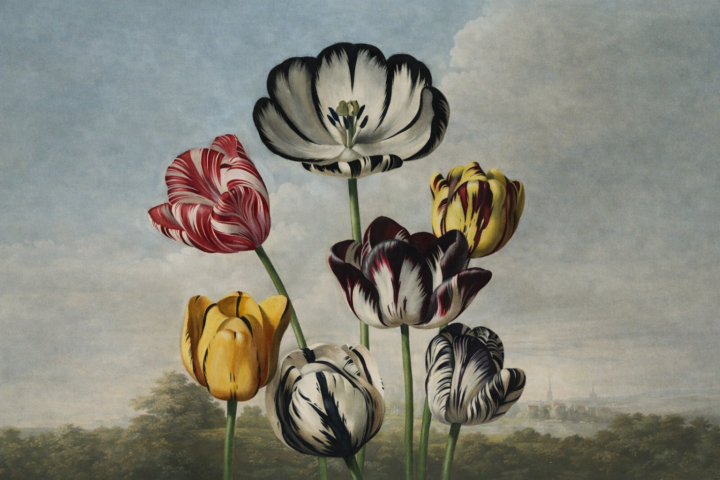
ORIGINATED FROM CENTRAL ASIA
In reality, the tulip’s natural terrain is not in European gardens but in a deep, isolated part of mountains in Central Asia, in the Tien Shan and the Pamir Alai ranges. This is where wild tulips are to this day.
There exist some botanists who regard the tulip as an original plant found in the regions defined by the 40th parallel, stretching from northern China through southern Europe. This makes the tulip pre-date human cultivation by a large number of hundred thousand years.
Currently, five indigenous varieties of tulip exist in Crete. There is an endemic variety in Romania, the Banat tulip, found on the steep slope of the mountain Ciucarul Mare.
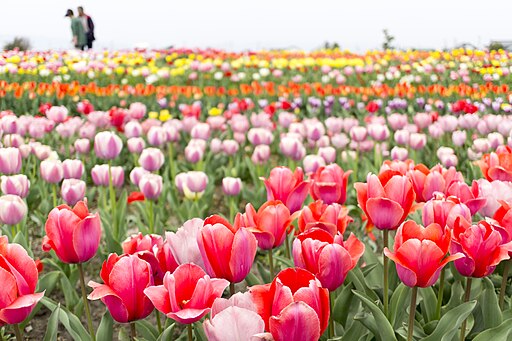
OTTOMAN’S WERE OBSESSED
The tulip became the sultan’s personal emblem and a privilege exclusive to the ruling class in Ottoman culture.
In addition to being aesthetically pleasing, tulip gardens were status symbols that exuded wealth and power. This obsession had a huge commercial component. Sultan Selim II placed an order for fifty thousand tulip bulbs from a single vendor in 1574. Tulips became so valuable during Sultan Ahmet III’s reign that the empire imposed stringent regulations on their sale, making it impossible to sell bulbs outside of the capital.
The “Tulip Age” is the name given to this era in Ottoman history. Additionally, the Turks hosted the first tulip festival in history, which was held under the moonlight at night.
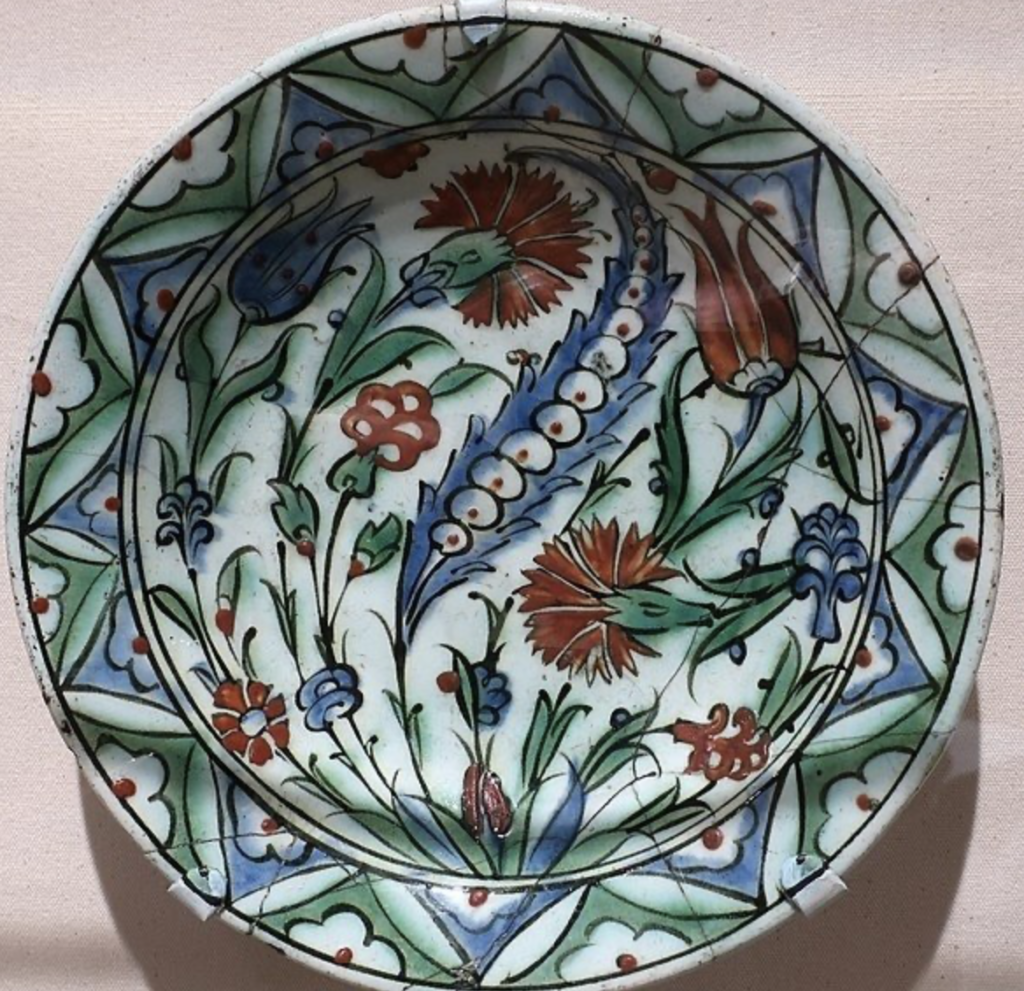
JOURNEY TO EUROPE
In 1554, Augier Ghislain de Busbecq, a Flemish ambassador who loved botany, was in Adrianople. He wrote about seeing “an abundance of flowers everywhere: daffodils, hyacinths, and what the Turks called Tulipan.” This was the first written European reference to tulips, published in his 1595 book titled “Letters from Turcia.”
The real hero of this story is Carolus Clusius, a Flemish doctor and botanist. In the mid-16th century, Clusius worked for Emperor Maximilian II in Vienna. There, he became friends with his landlord, the Flemish ambassador Augier Ghislain de Busbecq. Busbecq had received tulip bulbs as a gift from Sultan Suleiman I, and he shared them with Clusius.
After Emperor Maximilian II died and the new emperor dismissed him, Clusius eventually became a professor and head of the botanical garden at the University of Leiden in 1594. That’s how the tulip arrived in the Netherlands. Clusius didn’t just plant them and move on. He started the first real academic study of tulips, multiplying and cataloging them scientifically. He explored their botanical features and even their medicinal uses.
Now, here’s where it gets interesting. Some tulip species Clusius acquired had a virus called TBV. Instead of harming the flowers, this virus created gorgeous, vibrant striations and color patterns. Visitors to his garden were captivated by these blooms.
However, Clusius was determined and refused to sell his carefully grown bulbs. In 1598, thieves broke into his garden and stole a hundred bulbs in one night. Frustrated and likely feeling betrayed, Clusius abandoned tulip cultivation. He donated his remaining bulbs to close friends, and from there, tulips spread throughout the Netherlands like wildfire.
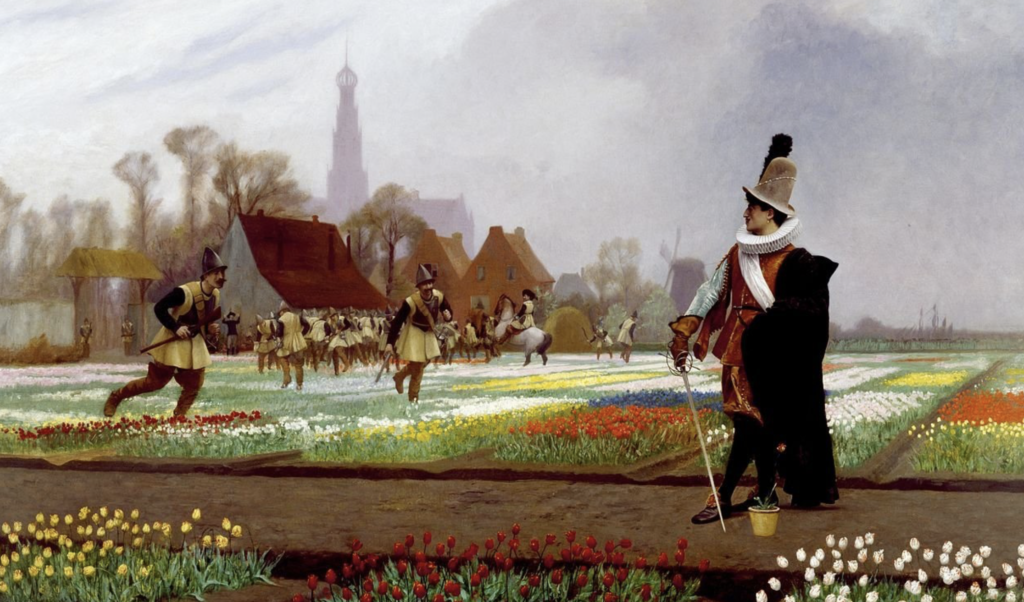
THERAPEUTIC POTENTIAL
For centuries, people have used tulips to treat insect bites, scratches, and various other skin problems. The sap of the flower was also used to relieve coughs and colds.
Recent studies have demonstrated the validity of many of these traditional uses. Tulip petals contain a high concentration of antioxidants that can help reduce inflammation, kill bacteria, and possibly even fight certain types of cancer. Studies have also shown that ingesting tulip petals may reduce the risk of harmful bacteria, such as E. coli, and research has indicated that animal studies suggest tulip petals may lower blood pressure and cholesterol levels. Tulip petals contain a natural growth hormone called auxin, which is responsible for cell repair and regeneration, which could be the reason for the traditional use of tulip petals for treating wounds.
While there is considerable promise regarding the health benefits of tulip petals, it is advisable for anyone considering using them for medicinal purposes to consult with a physician to ensure that no allergic reactions or poisoning occur.
REFRENCES:
Lesnaw, J.A. and Ghabrial, S.A., 2000. Tulip breaking: past, present, and future. Plant Disease, 84(10), pp.1052-1060.
Amsterdam Tulip Museum (January, 2025)
Tulip Tales | Bloom College. (2025). https://bloomcollege.com.au/blog/tulip-tales/
A Tiptoe Through the Tulips – The Herb Society of America Blog. (2018). https://blog.herbsociety.org/a-tiptoe-through-the-tulips/
Leave a Reply