
HOW IT STARTED
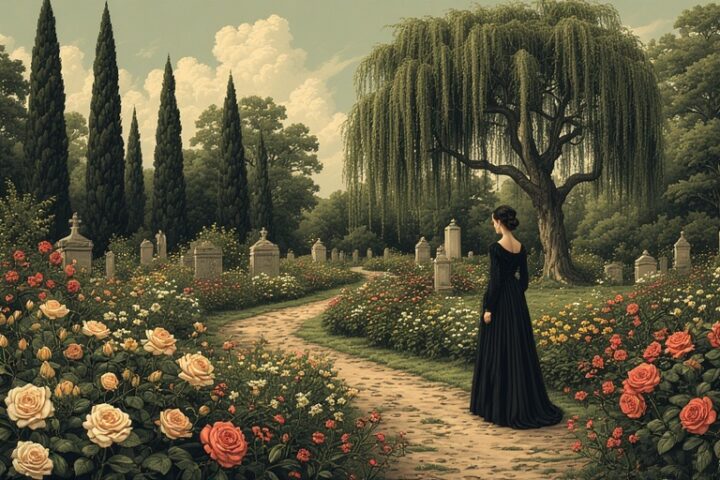
To understand the Victorian garden cemetery, we first have to understand the problem it solved. For centuries, people in Britain were buried in small, cramped churchyards right in the heart of their towns. By the early 1800s, these spaces were catastrophically overcrowded. Graves were stacked, the air was foul, and contaminated water from these sites spread cholera and typhoid. The old churchyard was no longer just a place of rest; it had become a source of death itself.
Then was to move burial away from populated centres and into a completely new kind of space. The blueprint came from the private estates of the wealthy, who had long built symbolic monuments in their gardens, using weeping willows and yew trees to signify sorrow and eternity. The result was the “garden cemetery.”
TREES OF SORROW & ETERNITY
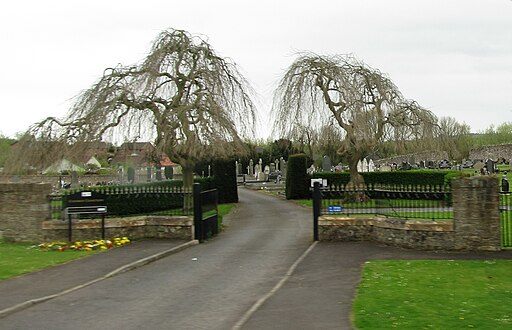
The first things you’d notice in these garden cemeteries were the trees. The most famous was the Weeping Willow. Its long, drooping branches looked like falling tears, making it the perfect symbol for sadness and mourning. tombstones. The Cypress tree with its tall, dark, slender shape brought a feeling of solemn respect. It was a symbol of mourning and eternal life, often planted in lines along the main paths. The Yew tree held two meanings: death and everlasting life. It’s famous for living an incredibly long time (sometimes over a thousand years).
Eric Jones
THE CONSTANT GREENS
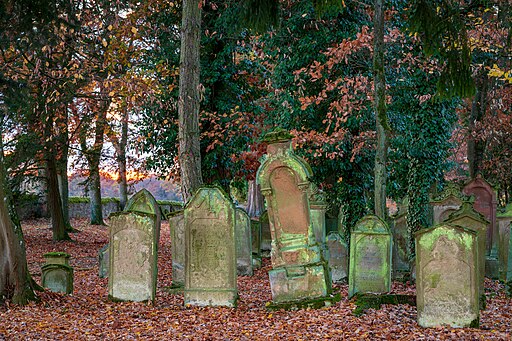
Alongside the flowers were the evergreens. Ivy was one of the most meaningful. Because it clings and holds on as it grows, it came to represent faithful attachment and eternal life. You’d often see it winding up monuments or gently covering graves. Rosemary carried its own message too. The old phrase “Rosemary for remembrance” made it a natural part of these gardens, and people would sometimes carry a sprig of it during funerals. Other evergreens, like Holly and Box, were also chosen for their steady presence.
SYMBOLS ON STONE & SUPERSTITIONS
It wasn’t just the plants that spoke. The shapes carved into the stone and the wreaths placed around the graves had their own stories to tell.
The Greek and Roman symbol, the wreath, meant a victory over death itself. A subtle sign that a person had fought the good fight and had won their place in heaven. You would find these wreaths resting on the heads of stone angels, held tightly by figures frozen in grief, or hung simply on the side of a tomb.
Flowers too, were carved on graves and each had their own silent language. A rose in full bloom often meant a married woman lay there, while a small, closed rosebud might mark the grave of a child.
There was also a unspoken belief that the earth itself could be a judge. People said that if a person had been good, flowers would naturally spring from their grave. But if they had been wicked, only weeds would take root.
These symbolic landscapes faced very real challenges as well. They encountered problems like vandalism, neglect, and later “improvement” campaigns that sometimes ripped out the original plantings. This is why not all historic species survive today in their original locations.
Leave a Reply