
ORIGINS AND EVOLUTION
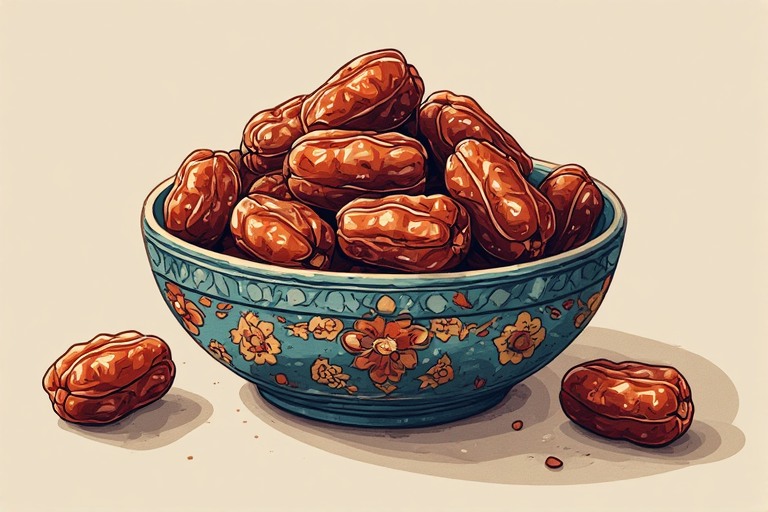
The earliest domestication of the date (or date palm) signals point directly to the Persian Gulf region. As humans moved these trees across North Africa and the Near East, the palms began to mingle with their wild relatives. We have evidence of “ancient introgression” or in simple terms, genetic mixing. For instance, researchers analyzed a 2,100-year-old leaf found in Saqqara, Egypt. By using molecular-clock analysis, they discovered that by at least 2,200 years ago, cultivated dates were already swapping genes with wild species like Phoenix theophrasti and Phoenix sylvestris. Studies also reveal that the seeds found in ancient Egyptian ruins depict a highly organised system of agriculture and dispersal routes that followed human migration.
IMPORTANCE IN RELIGION
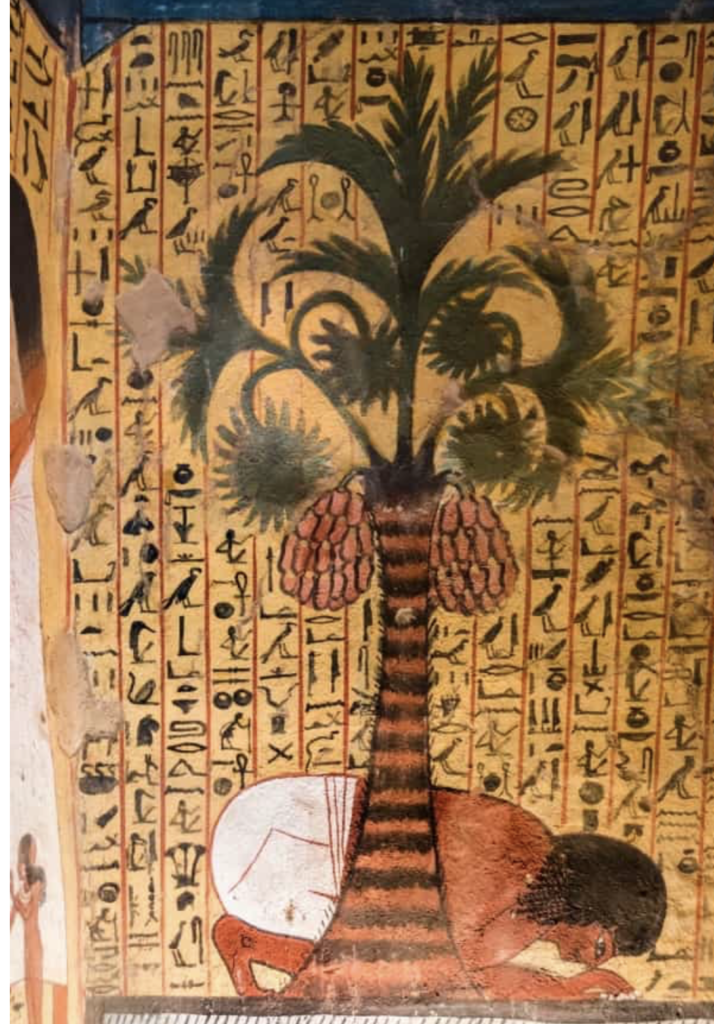
The date palm is woven into the very fabric of spiritual life in the Middle East. In the Quran, the date palm is mentioned more than any other tree, appearing 23 times. The Prophet Muhammad frequently used the date palm as an analogy for a believer: resilient, productive, and deeply rooted. One can see this spiritual connection most clearly today during Ramadan. Millions of people around the world follow the tradition of the Prophet Muhammad by breaking their daily fast with a date. It’s a beautiful ritual, but it’s also incredibly practical; those natural sugars give the body an almost instant energy boost and help with hydration after a long day of fasting.
In the early days of Medinah, the date palm was the backbone of the community. It wasn’t just the fruit that mattered; the entire tree was used. The trunks were used for construction, the leaves for weaving and household goods, and the fruit was the primary dietary staple.

SYMBOLISM IN PALESTINE
Dates, in particular, carry deep spiritual meaning for Palestinian people. A popular belief holds that Jesus’ love and devotion to his mother came from the dates that nourished him. Newborns in Palestine are often given their first taste of sweetness as water infused with mashed dates. Children raised on date juice are believed to develop charming, persuasive speech. In many of these practices, dates from Mecca are especially prized, reinforcing their sacred association.
Palm imagery extends beyond food into decoration and ritual in Palestine. Palm branches appear frequently in Muslim shrines, on house walls, and in embroidered designs from Bethlehem and Ramallah. Among some Orthodox Christian women, dates from the palm tree of Mar Saba are believed to cure sterility.
MODERN ISSUES
But it’s not all ancient history. Today, the date industry faces modern hurdles. Producers deal with significant challenges in pest control and the difficult transition to organic farming. Managing postharvest quality making sure the date stays perfect from the tree to your kitchen is a massive economic factor for producing countries. Whether it’s being used as a simple household stuffing or being processed into high-end powders and juices, the date remains an essential dietary component.
MEDICINE AND RESEARCH
Dates are a powerhouse of bioactive compounds, specifically phenolics, flavonoids, and carotenoids. These substances act as potent antioxidants and anti-inflammatories. Scientists are currently focused on how these compounds can actually inhibit ‘pro-inflammatory cytokines’ and enzymes like COX-2, which are the culprits behind many chronic issues. What’s truly exciting is where this research is heading. Beyond just being a healthy snack, dates are showing incredible promise in the prevention and control of some of our most challenging modern diseases, including diabetes, cardiovascular disease, and even neurodegenerative conditions like Alzheimer’s.
REFERENCES
Fernández-López, J., Viuda-Martos, M., Sayas-Barberá, E., Navarro-Rodríguez de Vera, C., & Pérez-Álvarez, J. Á. (2022). Biological, Nutritive, Functional and Healthy Potential of Date Palm Fruit (Phoenix dactylifera L.): Current Research and Future Prospects. Agronomy, 12(4), 876. https://doi.org/10.3390/agronomy12040876
Canaan, T. (2005). Plant-lore in Palestinian superstition. Jerusalem Quarterly, (24).
The History and Significance of Dates – Bahamii. (2023). https://bahamii.com/blogs/news/the-history-and-significance-of-dates?srsltid=AfmBOoo094Z9kjSEpzhgrulE_9hmxpU-GW8Y0ICGGWzffoMyYnOSs3ME
An Overview of Date (Phoenix dactylifera) Fruits as an Important … (2024). https://pmc.ncbi.nlm.nih.gov/articles/PMC11011438/
The History, Science, and Uses of Dates – Tori Avey. (2018). https://toriavey.com/dates-history-science-uses/
Leave a Reply