We may not realise it, but plants are at the heart of Norse mythology’s most important stories. Here’s how:
Myth 1: The Tree Yggdrasil Brought About Life
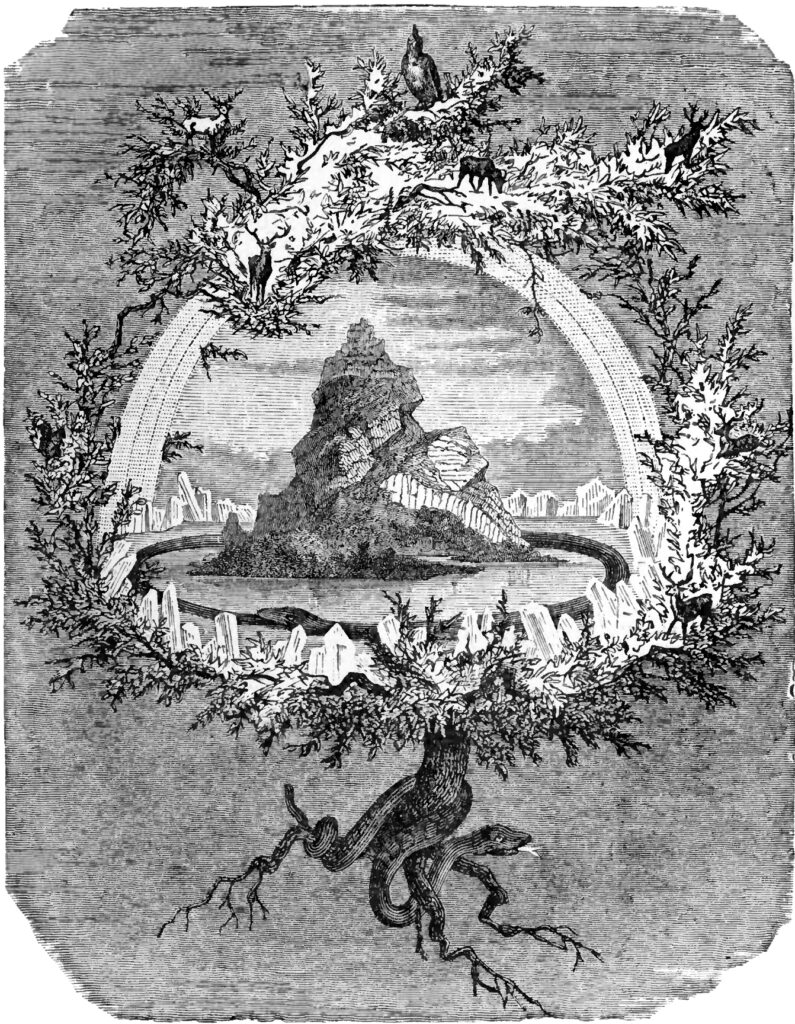
Before time began, only the tree Yggdrasil and the void existed. Who or what created this tree remains a mystery. All nine realms (Asgard, Midgard, Jotunheim, Alfheim, Muspelheim, Nidavellir, Niflheim, Svartalfheim, and Vanaheim) existed in and around its roots. Yggdrasil appears to have emerged from the misty void of Ginnungagap, flanked on one side by the fiery realm of Muspelheim and on the other by the icy terrains of Niflheim. Eventually, the fires of Muspelheim began to melt the ice of Niflheim, resulting in the emergence of two entities: Ymir, the giant, and Audhumla, the cow. The cow licked the ice from Niflheim to nourish itself and soon uncovered Buri, the ancestor of the gods. Buri had a son named Borr (with no mention of how he came to be) who mated with the giantess Bestla (with no mention of her origins) and gave birth to the first gods: Odin, Vili, and Ve. Meanwhile, Ymir gave birth to the giants through self-fertilization. How? When he slept, a male was born from his left armpit, and another male emerged from his legs. Thus, these offspring became the ancestors of the giants. Odin and his brothers slaughtered Ymir, and all the giants’ offspring were drowned in the gushing blood, except for Bergelmir and his wife, who escaped on a raft and would later produce all the giants who became the sworn enemies of the gods. After Ymir’s death, Odin, Vili, and Ve dragged his body to the void of Ginnungagap, where they created the world from his corpse. The legends say that at this same time, the nine realms were also created.
Myth 2: The First Humans Came from Trees
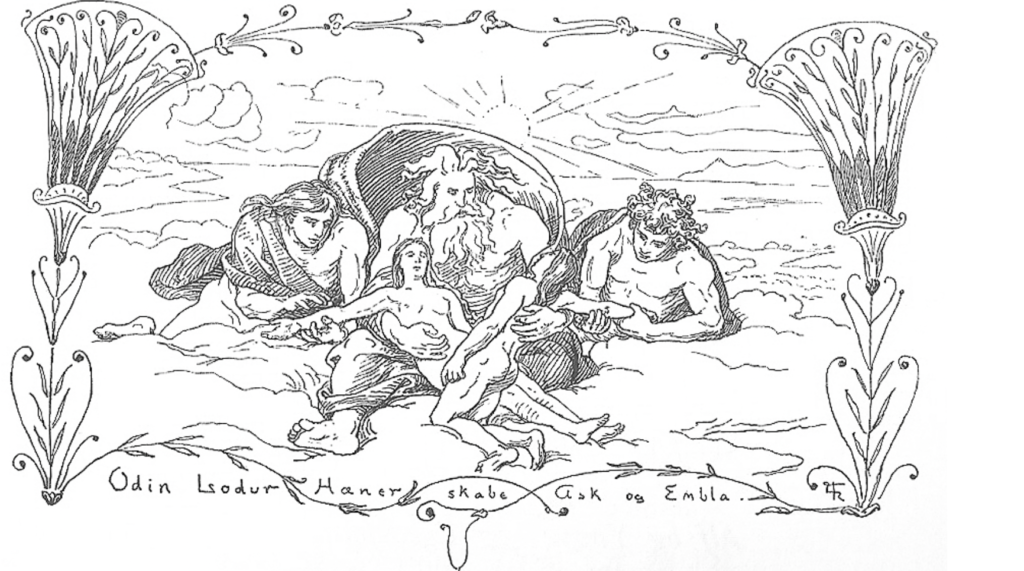
According to the 10th-century collection of Old Norse verses in the Poetic Edda, the gods Odin, Hœnir, and Lodurr were near a nameless shore when they found the first humans, the male Ask and the female Embla, and gave them life. Odin provided spirit in the form of breath, Hœnir granted intelligence and a voice, and Lodurr supplied blood to warm their bodies. It is believed that the male human came from the ash tree and the female from the elm. Thus, the realm of humans, Midgard, was born.
Myth 3: Magic Apples Granted Immortality to the Gods
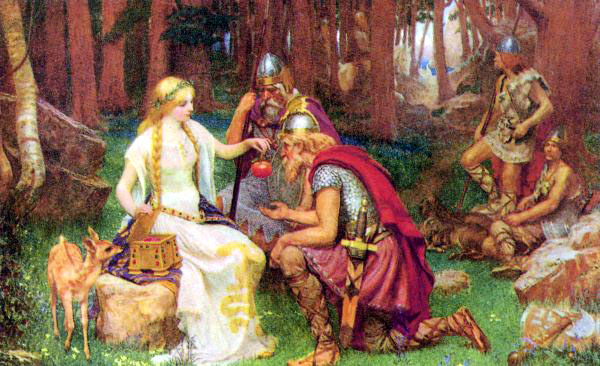
It is often believed that gods and deities in ancient cultures are immortal. However, the Norse gods were not truly eternal. They lived unusually long lives, remaining youthful and full of vitality thanks to the goddess Idunn and her magical apples. By consuming these apples regularly, the gods could ward off old age and decay. In the 13th-century Icelandic text on Norse mythology, the Prose Edda, there is a story in which the trickster god Loki is kidnapped by the giant Thjazi, who disguises himself as an eagle. Thjazi will only release Loki if he calls upon Idunn to bring her magic apples. The ultimate goal is the apples themselves; by kidnapping Idunn, Thjazi seeks to capture the very source of the gods’ eternal youth. Loki agrees, and Idunn is taken away by the giant. Without the apples, the gods begin to age and wither, growing weak, gray, and old. This desperate crisis forces the gods to find Idunn, leading to her rescue and eventual return to Asgard, a mission attempted by Loki.
Myth 4: A Small Mistletoe Kills Odin’s Son
Frigg was a fertility goddess and Odin’s wife, blessed with gifts of cleverness, clairvoyance, and prophecy. She is tormented by dreams in which her son, Baldr, dies. Although Frigg knows everyone’s fate, she cannot see what or who is coming for Baldr. Witnessing her sorrow and helplessness, Odin travels to the realm of the dead, Nilfhel (a lower level of Nilfheim), and resurrects a powerful witch to ask how to avert his son’s fate.
Instead of offering a solution, the witch declares that Nilfhel has been preparing for Baldr’s arrival. In her desperation to save her son, Frigg travels throughout the Nine Realms and gets promises from all living and non-living things that they will not harm him.
Later, the gods of Asgard engage in a sport of hurling objects at Baldr, who remains unharmed due to the promises made to Frigg. Loki, Odin’s adopted son, becomes curious about how Baldr can be killed. He transforms himself into a woman and visits Frigg, asking what the gods are doing in Asgard. Frigg tells the visitor that they are playing their usual game of throwing things at Baldr. The visitor then inquires if it is true that all things took an oath never to harm the most handsome and kindest of gods. Frigg, suspecting nothing, reveals that she never extracted an oath from the young plant mistletoe because it was so small and harmless.
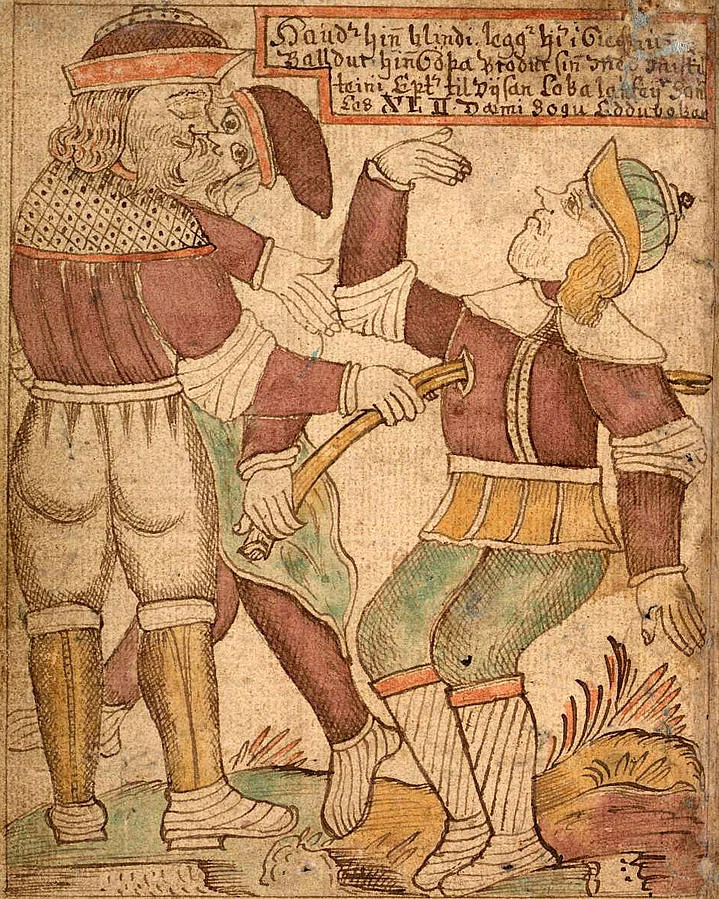
Loki leaves and finds the mistletoe west of Valhalla. Fashioning it into a small dart, he returns to Asgard and hands it to the blind god Hodur, who feels bad for being unable to participate in the game. Loki assures him that he will guide Hodur’s aim, and Hodur hurls the mistletoe, piercing Baldr’s breast and killing him instantly. The gods are struck with horror and begin to weep as Frigg arrives to find her son dead. At the funeral ceremony, Baldr’s wife, Nanna, the moon goddess, takes her own life in grief.
Myth 5: The Goddess of Fertile Soil and Agriculture
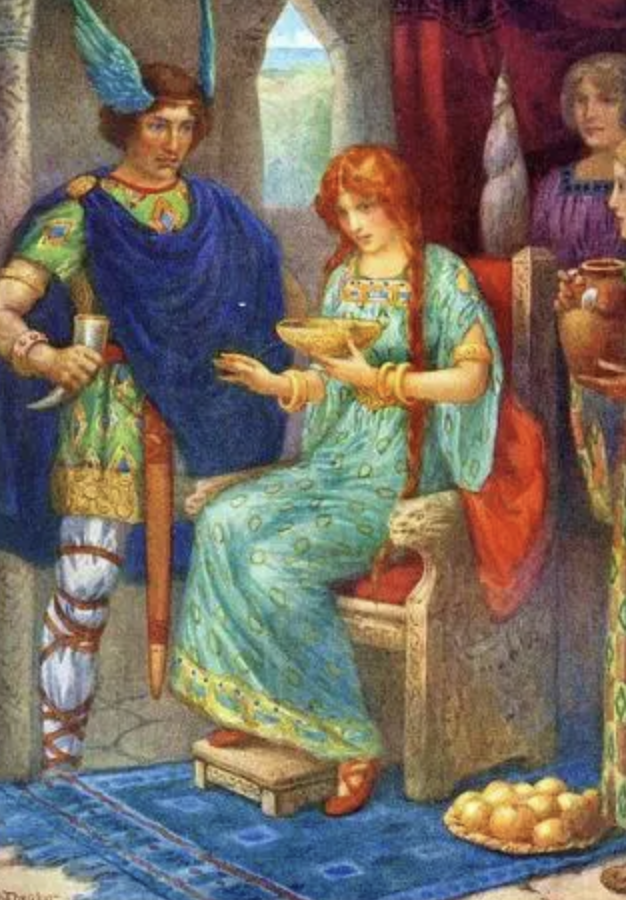
Gerdr is the giantess goddess of fertility and abundance, and she is the wife of Freyr, one of the most important gods of Vanaheim. As a goddess, Gerdr oversees the nurturing and growth of crops, plants, and all forms of life. According to Norse mythology, she is responsible for the fertile soil that serves as a life-giving medium for seeds and the growth within cultivated fields. Gerdr also governs the latent potential of the land, which lies dormant in winter and flourishes in spring and summer, as well as the process of fertilisation.
Leave a Reply